
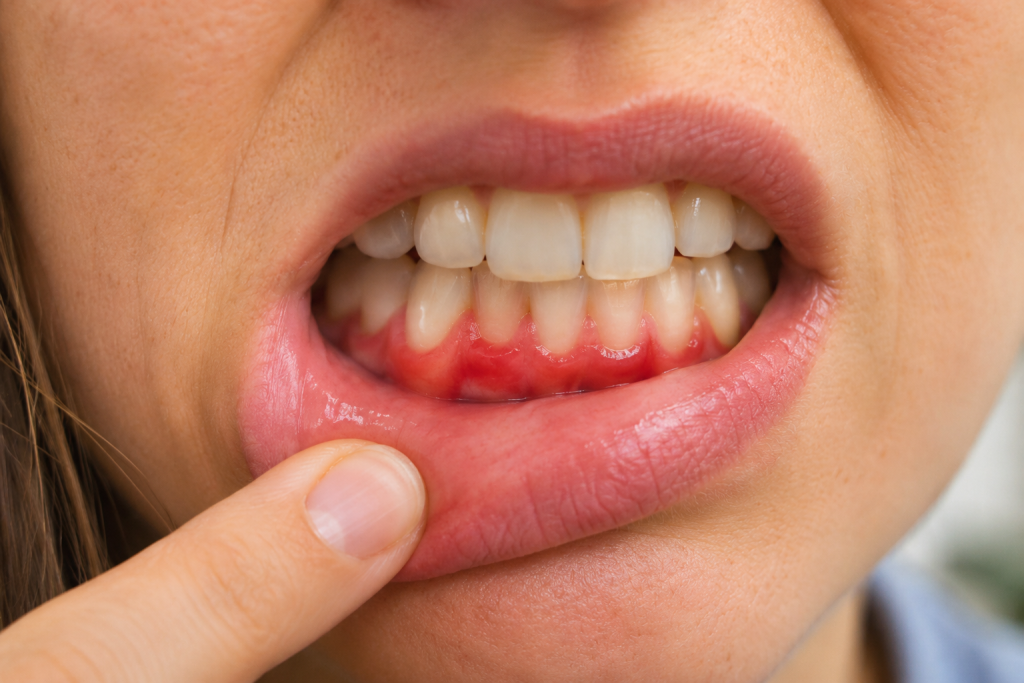
Healthy gums vs unhealthy gums: How to tell the difference
When you look in the mirror, you probably notice your teeth more than your gums. Are they looking white? Is there anything stuck between them? But how often do you actually look at the gums surrounding your teeth?
Your gums are important. They help protect and support your teeth, so when something changes in their appearance, it can be the first sign that something isn’t quite right. The hard thing is that unhealthy gums don’t always hurt. In fact, you can have gum disease without even realising it.
So, what should healthy gums look like, and how can you tell when there’s something wrong?
What do healthy gums look like?
Healthy gums should feel firm and fit snugly around your teeth, without any noticeable swelling or tenderness. Healthy gums are often described as pink, but their natural colour can vary considerably depending on your skin tone. Some people have naturally darker gums or areas of brown pigmentation, and that’s okay.
Instead of focusing on colour alone, look for these signs:
- Firm texture: Your gums feel firm rather than puffy or swollen.
- A close fit: The gum tissue sits neatly around each tooth.
- No regular bleeding: Your gums don’t routinely bleed when brushing or flossing.
- No ongoing discomfort: You can eat, brush and floss without gum pain or tenderness.
Also, healthy gums shouldn’t have a persistent, unpleasant smell or taste.
What are the signs of unhealthy gums?
Unhealthy gums can look and feel quite different, although the changes are sometimes subtle.
You might notice:
- Redness or a change from your usual gum colour
- Swollen, puffy or tender gum tissue
- Bleeding when brushing or flossing
- Persistent bad breath
- Gums pulling away from your teeth
- Teeth appearing longer than they used to
- Loose teeth or changes in how your teeth fit together
Not everyone experiences all these symptoms. Some people have gum disease with very few noticeable signs. That’s why regular dental check-ups with our family dentist are important, even when everything seems fine.
Why do gums become unhealthy?
The good news is that gingivitis is generally reversible with improved oral hygiene and professional dental care.
One of the most common causes is plaque, a sticky film of bacteria that continually forms on your teeth. When plaque isn’t removed properly through brushing and cleaning between your teeth, it can irritate the gums and cause inflammation. This early stage of gum disease is called gingivitis.
However, if the inflammation increases, it can develop into periodontitis, a more serious form of gum disease that affects the tissues and bone supporting your teeth. Unlike gingivitis, the damage caused by periodontitis cannot always be reversed, although treatment can help manage the condition and prevent further deterioration.
Is it normal for gums to bleed when brushing?
Our Hervey Bay family dentists often get asked this question, and the simple answer is no. Regular bleeding isn’t something you should ever ignore.
Maybe you might notice a little blood when you first start flossing or if you’ve brushed too aggressively. However, bleeding can also be an early sign of gum inflammation.
If your gums bleed a lot, it’s worth booking a dental appointment to find out why. And don’t stop cleaning between your teeth simply because your gums bleed. Gentle, consistent cleaning is important, although your dentist can help you work out the best technique for your gums.
Is it an emergency? We also offer emergency dental treatment in Hervey Bay.
Can you have gum disease without pain?
Most definitely, and this is one of the reasons gum disease can go unnoticed. Unlike a toothache, which gets your attention fairly quickly, gum disease can develop gradually.
You might feel perfectly comfortable while inflammation or damage is occurring beneath the gumline. A dentist can assess your gums, measure the spaces around your teeth and identify changes that aren’t always visible at home.

How can you keep your gums healthy?
Looking after your gums doesn’t need to be complicated, but consistency matters. Start with the basics:
- Brush twice daily using fluoride toothpaste and a soft-bristled toothbrush.
- Clean between your teeth every day with floss or interdental brushes.
- Avoid smoking and vaping.
- Keep up with 6-monthly dental check-ups and professional cleans.
- Speak to your dentist about any bleeding, swelling or changes in your gums.
If you already have gum disease, you may need additional treatment or more frequent maintenance appointments. The earlier a problem is identified, the easier it often is to manage.
Healthy gums are worth looking after
It’s easy to overlook your gums when your teeth feel fine. But healthy gums are an important part of keeping your natural teeth strong and supported.
At Dentist Direct in Hervey Bay, we believe good dental care starts with understanding what’s happening in your mouth and helping you make informed decisions about your oral health. Whether you’ve noticed bleeding gums, have concerns about gum recession or are simply due for a check-up, our friendly team is here to help.
Book an appointment with Dentist Direct and give your gums the attention they deserve.
Related Posts
View all
Types of dental implants
Unless it’s at the front of your mouth, missing a tooth might not seem like a big deal. But over time, that…

How to stop tooth pain fast
Are you struggling with tooth pain? Are you experiencing discomfort that’s affecting your daily life? Tooth pain can be debilitating, and in…